15 Best AI Tools for 2026: BFF AI, ChatGPT, Gemini & More

Best AI tools 2026 are transforming how businesses, creators, and entrepreneurs work online. From writing and research to design, video, and automation, today’s AI tools for business can dramatically increase productivity and reduce costs.
But here’s the problem:
There are too many AI apps, and most “Top AI Tools” lists are either outdated or written for clicks—not for real workflows.
So in this guide, you’ll find:
- A practical ranking of the best AI tools across writing, design, research, video, meetings, and automation
- Clear “best for” use-cases (so you pick the right tool fast)
- Prompt templates you can copy/paste
- A simple plan to stack AI tools without wasting money
Why These Are the Best AI Tools 2026 for Business and Productivity
When selecting the best AI tools 2026, we focused on real-world impact rather than hype. Every tool in this list was evaluated based on practical business value, ease of use, reliability, and how much time or money it can realistically save. Instead of chasing trends, we prioritized AI software that professionals, creators, and entrepreneurs can use daily to improve productivity and streamline workflows.
We also considered versatility and scalability. The best AI tools 2026 are not just powerful — they integrate well into existing workflows, support multiple use cases, and grow with your business. Whether you need AI for writing, research, automation, design, or video production, the tools below offer flexible solutions that work for startups, solo creators, and established companies alike.
Finally, we looked at long-term sustainability. The AI landscape evolves quickly, so we selected platforms that demonstrate consistent development, strong user adoption, and practical features that solve real problems. The goal of this guide is simple: help you choose the best AI tools 2026 without wasting time, money, or effort on tools that don’t deliver measurable results.
Quick Comparison (Fast Picks)
| Tool | Best For | Why It’s Great |
|---|---|---|
| BFF AI (bff-ai.com) | All-in-one AI assistant | Multiple AI models + real-time search + exports + document chat + voice options |
| ChatGPT | General-purpose creation | Brainstorming, writing, images, learning, and more |
| Google Gemini | Google ecosystem | Strong for planning + writing + Google Workspace workflows |
| Claude | Long-form writing + summaries | Excellent for drafts, editing, and summarizing information |
| Perplexity | Research with citations | Answers backed by sources you can open and verify |
| Canva Magic Studio | Marketing design | AI inside Canva for fast creative production |
| Notion AI | Notes + knowledge base | AI search, writing, and note workflows inside Notion |
| Grammarly | Editing + rewrite | Tone control + rewrites + idea generation |
| Midjourney | High-quality images | Advanced prompting + image guidance workflows |
| Runway | AI video generation | Text-to-video & consistent cinematic generation |
We’ll also cover “honorable mentions” that are extremely useful (Descript, Otter, Zapier, NotebookLM, Copilot, Firefly, Jasper).
How to Choose the Right AI Tool in 2026 (Buyer’s Guide)
Before you buy anything, do this:
Step 1: Pick one “daily driver”
Choose one tool you can open every day for:
- writing
- ideas
- summaries
- planning
- quick Q&A
That’s why BFF AI is #1 here: it’s positioned as an all-in-one assistant and supports multiple model choices plus practical workflow features like document uploads and exporting.
Step 2: Add specialists only when needed
Specialists are worth it when they save you hours on one task:
- design (Canva)
- images (Midjourney)
- video (Runway)
- research (Perplexity)
- writing polish (Grammarly)
Step 3: Decide based on your weekly tasks
Ask: “What do I do every week?”
- Blog posts? → BFF AI + Grammarly + Perplexity
- Social graphics? → Canva
- YouTube/TikTok? → Runway + Descript
- Meetings? → Otter
- Automations? → Zapier
The 15 Best AI Tools 2026 Ranked and Reviewed
1) BFF AI (bff-ai.com) — Best Overall All‑in‑One AI Tool
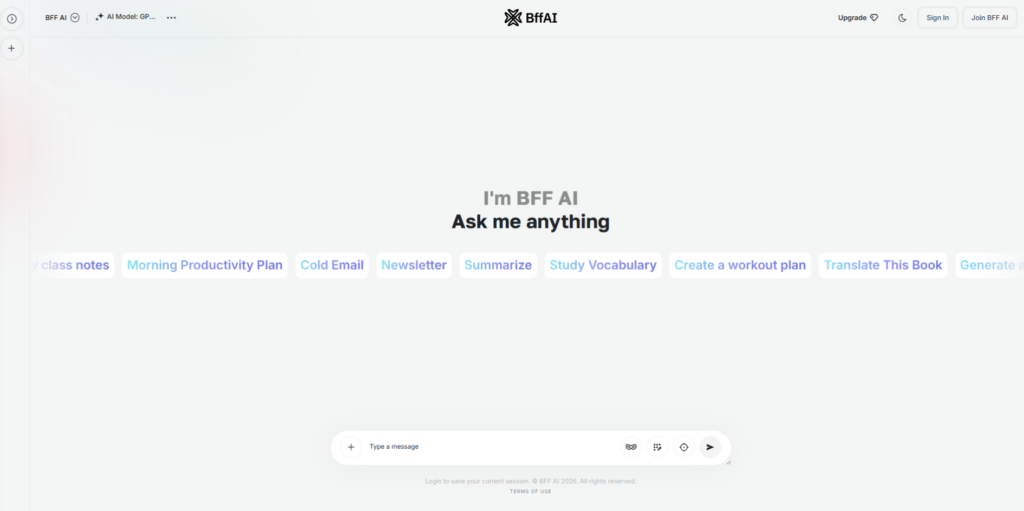
If you want one platform that can support multiple work styles (content, planning, productivity), BFF AI is the strongest “all-in-one” starting point.
Why it’s #1
BFF AI provides:
- A chat-style AI interface you can use immediately
- A choice of multiple AI models (you can switch depending on task and budget)
- Document and image upload for context-driven help
- Export options (PDF / Word / TXT) for turning outputs into usable files
- Real-time search mode (useful when you want current answers)
- Features like chat history, chat with documents, chatbot training, and voice chat in upgraded plans
Also, the site navigation shows multi-language support options (including English and العربية), which is helpful if your audience is bilingual.
Best for
- Business owners who want one tool for daily work
- Bloggers and marketers producing content weekly
- Teams that want quick drafts + exports + document-based Q&A
Example use cases (practical)
- Generate a full blog outline + intro + FAQs
- Turn messy notes into a clean SOP
- Rewrite a landing page with different tones
- Summarize a PDF policy or proposal you upload
- Produce social captions from a blog post
Quick-start prompts (copy/paste)
- Blog outline
“Create a detailed blog outline for: [topic]. Target audience: [who]. Goal: [traffic / sales / awareness]. Include H2/H3 structure and FAQ section.”
- Landing page rewrite
“Rewrite this landing page section to be clearer and more persuasive. Keep it under [X] words. Tone: confident, helpful. Include a short CTA.”
- Repurpose content
“Turn this blog post into: 10 tweets + 3 LinkedIn posts + 5 Instagram captions. Keep them non-repetitive and add hooks.”
2) ChatGPT — Best for Versatile Everyday AI Help
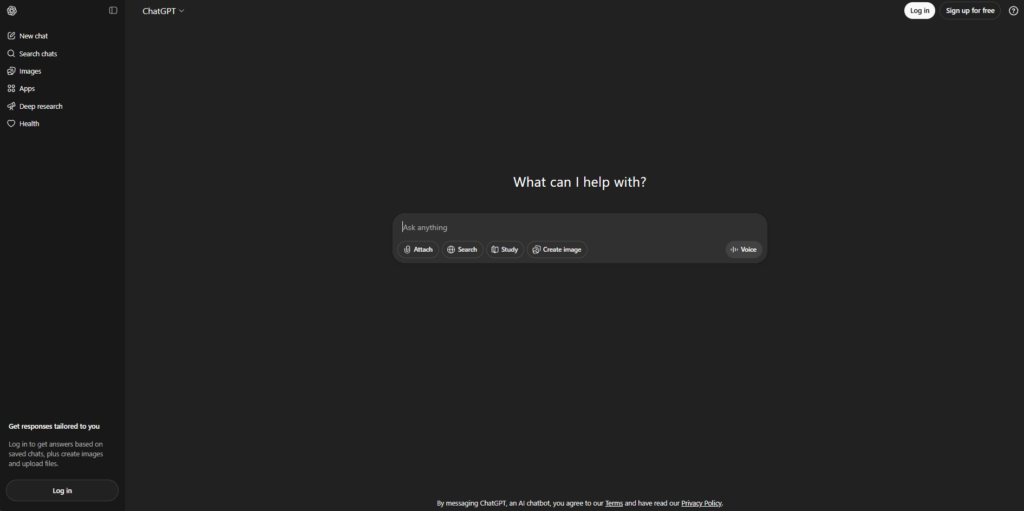
ChatGPT is a mainstream “do a bit of everything” assistant: ideation, writing, explaining concepts, and more.
It’s especially useful when you want a fast back-and-forth conversation to refine ideas.
Best for
- Brainstorming, outlines, rewrites, marketing angles
- Quick learning and explanations
- General creative work (including image creation features depending on your plan)
Quick-start prompts
- “Give me 25 blog title ideas targeting the keyword: [keyword]. Make them click-worthy but not spammy.”
- “Rewrite this paragraph at a 7th-grade reading level without losing meaning.”
3) Google Gemini — Best for Google Workspace + Planning
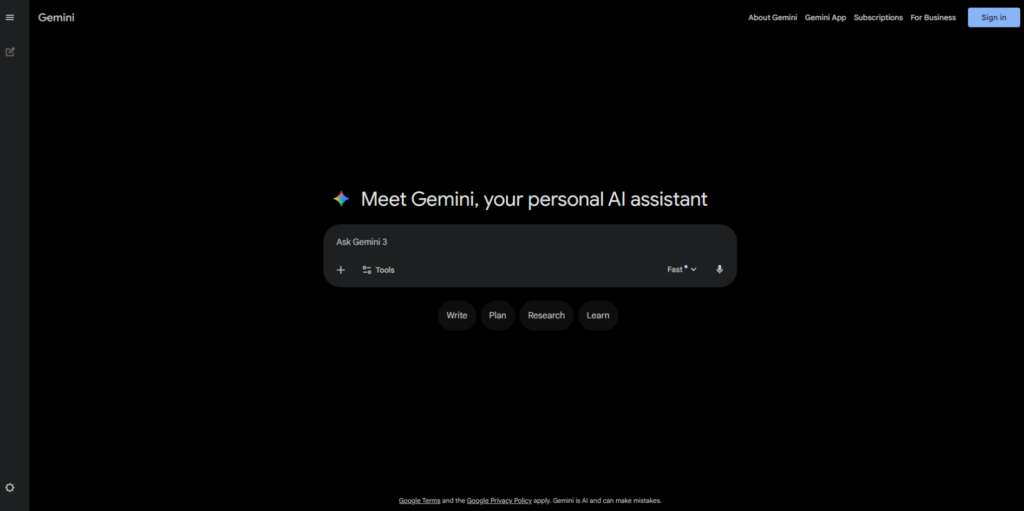
Gemini is Google’s AI assistant designed to help with writing, planning, brainstorming, and more.
If you live in Gmail/Docs/Sheets/Slides, Gemini has strong positioning inside Google workflows—like assisting from side panels and helping you draft content.
Best for
- Google Workspace heavy users
- Planning + writing in a structured way
- Teams standardized on Google tools
Quick-start prompts
- “Draft a professional email to [client] about [topic]. Make it short, polite, and clear.”
- “Create a project plan for launching [product] in 30 days. Include milestones and risks.”
4) Claude — Best for Long-Form Writing, Editing, and Summaries
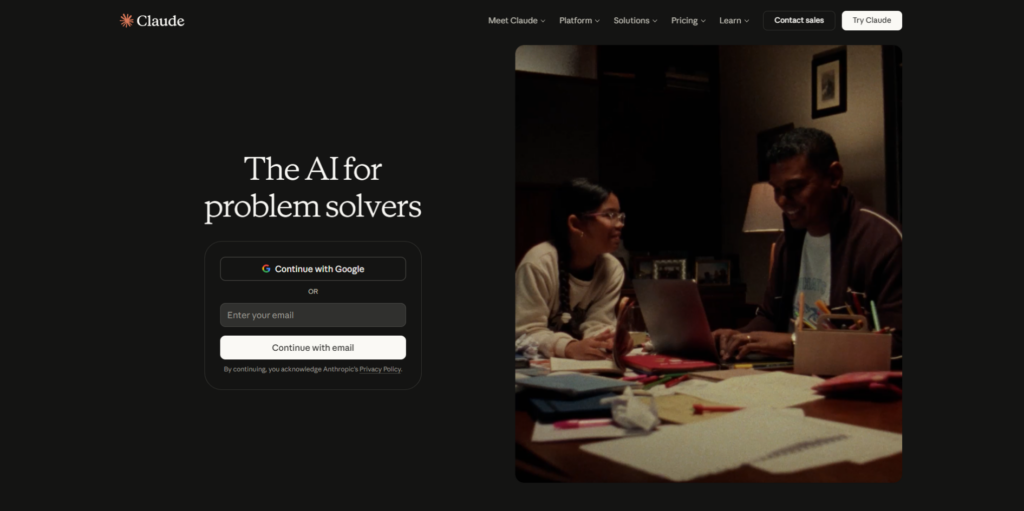
Claude is positioned as a next-generation AI assistant capable of conversation and text-processing tasks like summarization, writing, Q&A, and more.
People often like it for long-form drafts and polishing.
Best for
- Writing longer drafts
- Summarizing documents and notes
- Creating clean, readable content structures
Quick-start prompts
- “Edit this article for clarity and flow. Keep my tone, remove repetition, and strengthen transitions.”
- “Summarize this into 7 bullet points and 3 recommended actions.”
5) Perplexity — Best for Research With Verifiable Sources
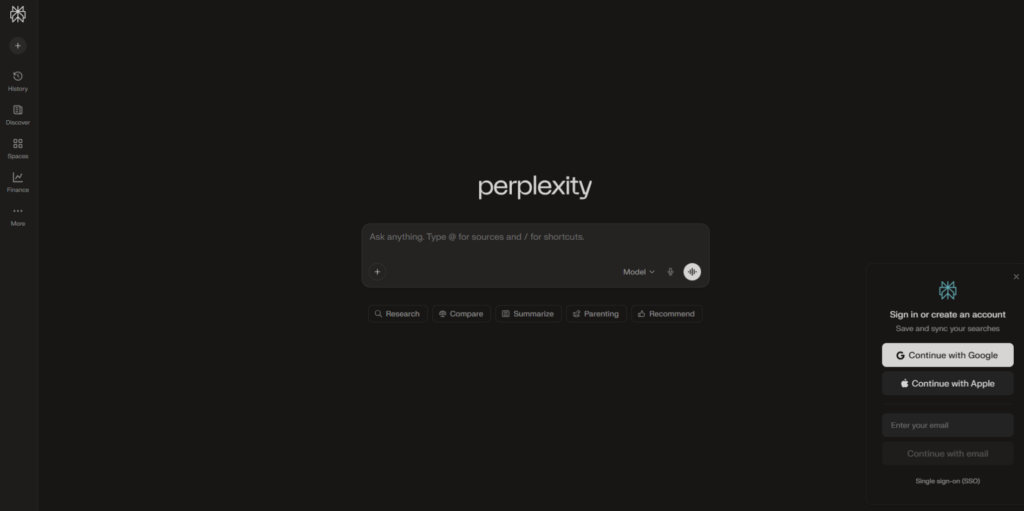
Perplexity describes itself as an AI-powered search engine that provides conversational answers backed by citations and links, so you can verify sources.
This is a big deal if you publish content and want:
- sources you can link to
- fewer “made up” claims
- faster research
Best for
- Blog research
- Competitor research
- Quick fact-checking with sources
Quick-start prompts
- “Find the best sources on [topic] and summarize the top 5 takeaways with citations.”
- “Compare [A] vs [B] and cite sources for each claim.”
6) Canva Magic Studio — Best AI Tool for Design + Marketing Creatives
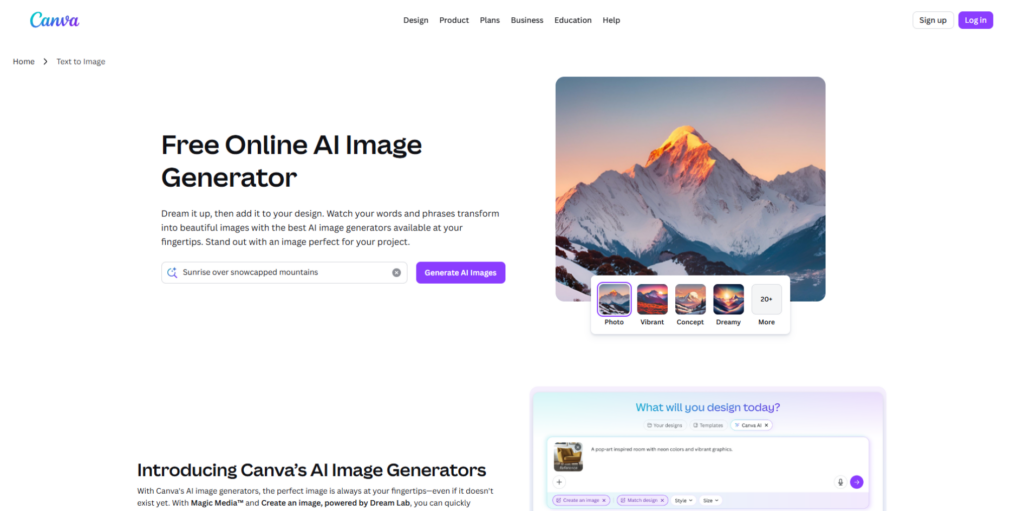
Canva’s Magic Studio positions itself as a bundle of AI-powered tools inside Canva.
Canva also offers a conversational AI assistant experience to generate text and designs in one place.
If you’re doing:
- ad creatives
- social posts
- thumbnails
- flyers
- brand kits
…Canva is a must-consider.
Best for
- Social media teams
- Brand designers
- Small businesses that need fast visuals
Quick-start prompts
- “Create 10 Instagram post design ideas for [business type] with a modern style.”
- “Generate a clean hero banner concept for a website selling [product].”
7) Notion AI — Best for Knowledge Bases + Notes + Team Documentation
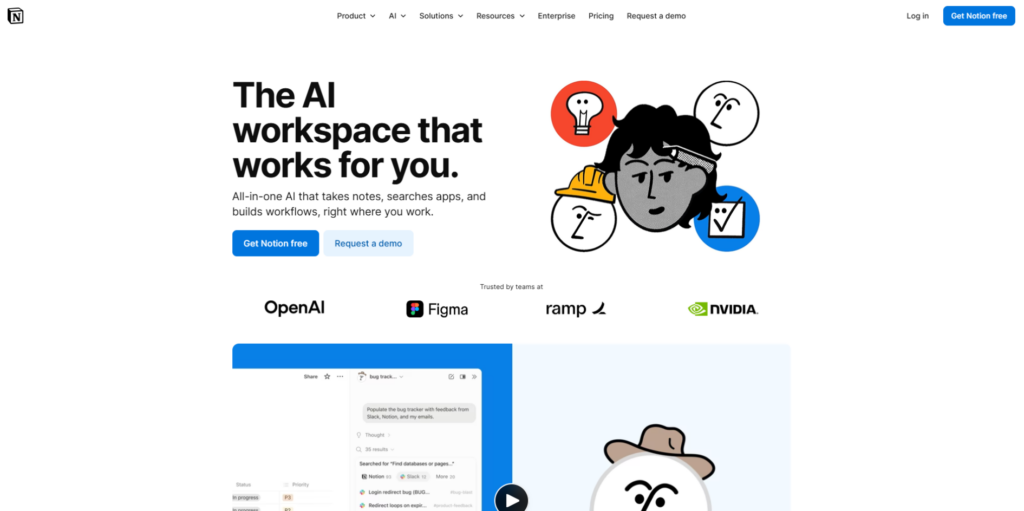
Notion’s AI offering is positioned as AI tools—search, writing, and note-taking—inside a flexible workspace.
If you run your operations in Notion, having AI inside the same system is incredibly convenient.
Best for
- SOPs and internal documentation
- Meeting notes and project updates
- Team knowledge base search + writing
Quick-start prompts
- “Turn these bullets into a standard operating procedure with steps, checklist, and warnings.”
- “Summarize this project page into weekly status update format.”
8) Grammarly — Best for Editing, Tone, and Rewrites
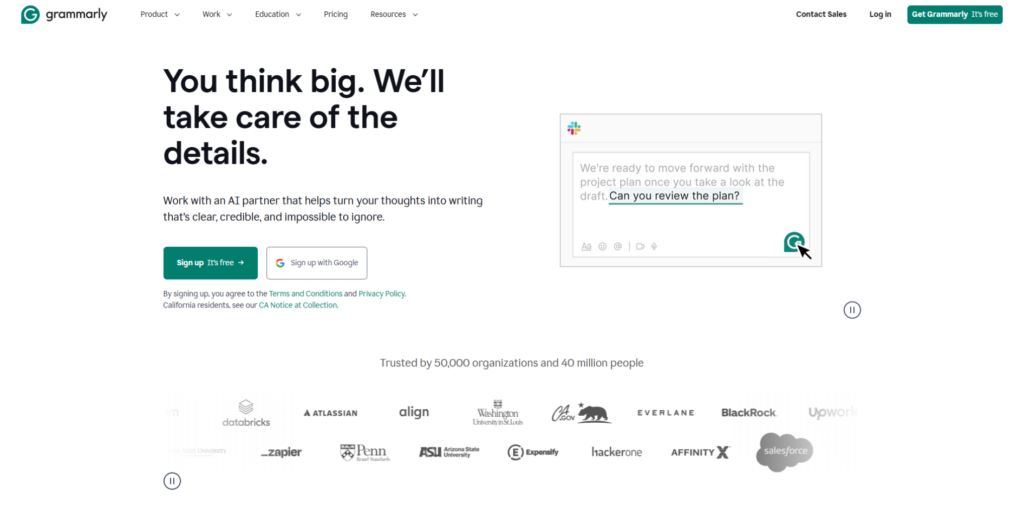
Grammarly positions itself as an AI-powered writing assistant that can help generate ideas and outlines.
It also highlights features like tone adjustments and full-sentence rewrites (depending on your plan).
If you already have drafts (from any AI tool or human writing), Grammarly is great for making them:
- tighter
- clearer
- more consistent in tone
Best for
- Editing AI drafts into “human-sounding” writing
- Business email tone control
- Polishing blog content before publishing
Quick-start prompts
- “Rewrite this paragraph to sound more confident but not aggressive.”
- “Improve clarity and reduce wordiness without changing meaning.”
9) Midjourney — Best for High-Quality AI Images
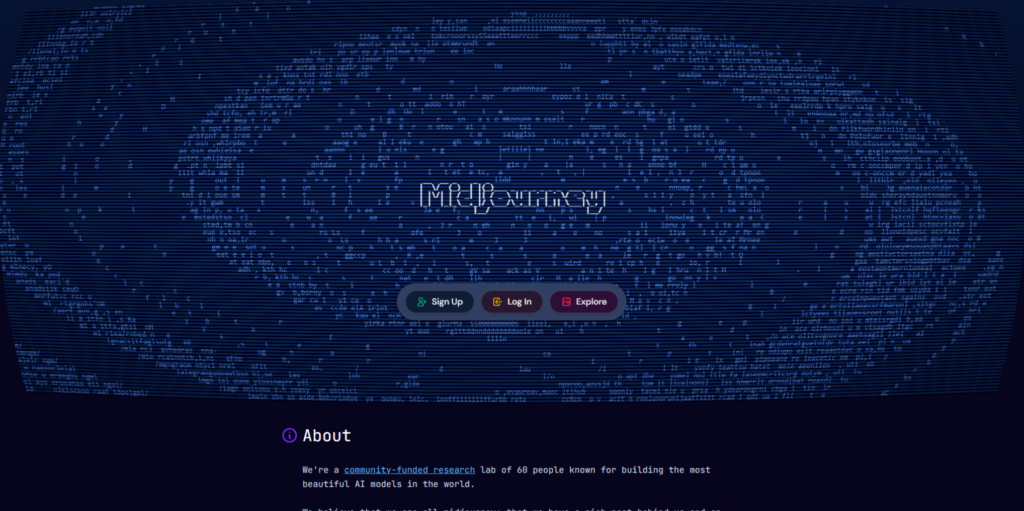
Midjourney’s documentation shows advanced image workflows like using image prompts (guiding generation by providing an image + text).
It also supports a web creation experience where you can see images generate and create variations.
Best for
- Website hero images
- Blog illustrations
- Product concept visuals
- Branding exploration
Quick-start prompts
- “Create a minimalist hero image for a web hosting landing page: fast, secure, modern, clean tech.”
- “Generate 8 icon concepts in a consistent style for: speed, security, support, uptime.”
10) Runway — Best for AI Video Generation

Runway offers AI image and video generation, including text-to-video and image-to-video.
Runway’s Gen-4 research describes improved consistency across scenes (characters/locations/objects), which matters when you want coherent storytelling.
Best for
- Marketing video creation
- Product explainers
- Social video ads
- Story-based visuals
Quick-start prompts
- “Generate a 10-second cinematic video showing [scene], with modern lighting, smooth camera motion, realistic style.”
- “Turn this product image into a short ad video with gentle motion and clean background.”
Honorable Mentions (Still Extremely Powerful)
These aren’t in the “top 10” only because the top 10 covers the biggest categories—but these tools are high-impact in real businesses.
11) Descript — Best for Podcasts + Video Editing With Transcription
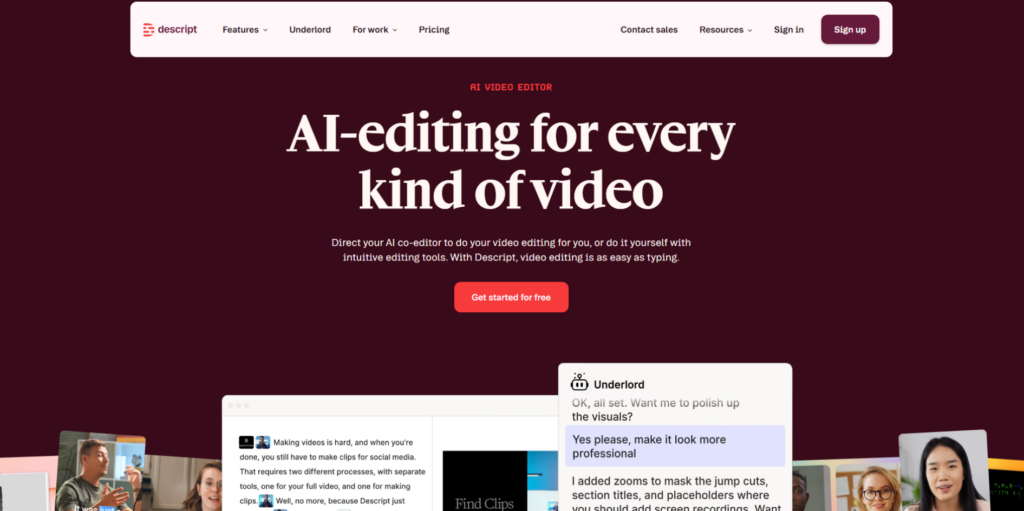
Descript positions itself as an editor where video/audio editing is like editing text—record, transcribe, edit, publish in one tool.
If you create content weekly, this saves huge time.
12) Otter.ai — Best AI Meeting Notes + Summaries + Action Items
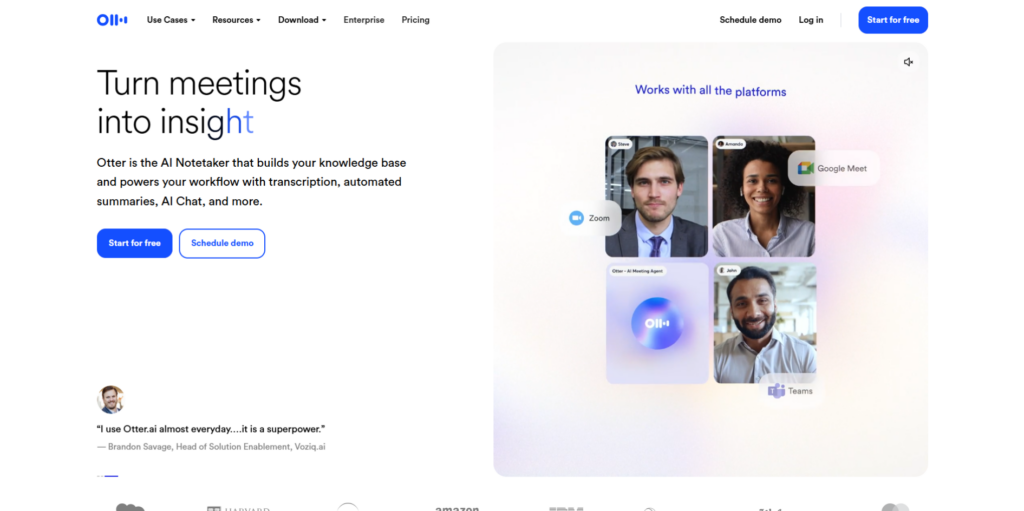
Otter describes an AI meeting agent that supports real-time transcription, automated summaries, insights, and action items.
Great if you have team calls, customer calls, or sales calls.
13) Zapier — Best for Automating AI Workflows Across Apps
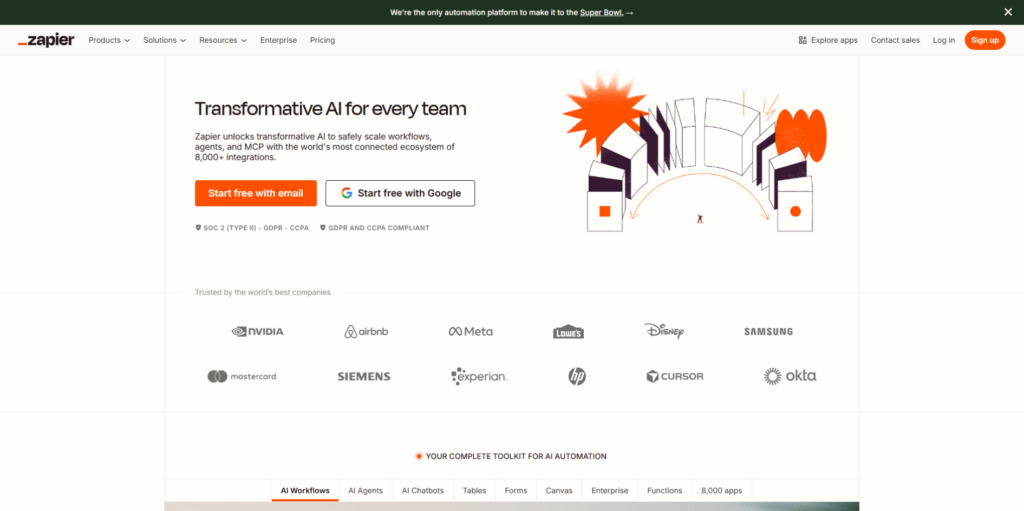
Zapier positions itself as AI + automation in one place, connecting tools and workflows across many apps.
If you want AI to do things (not just generate text), automation is the next level.
14) NotebookLM — Best Research Tool for Your Own Sources
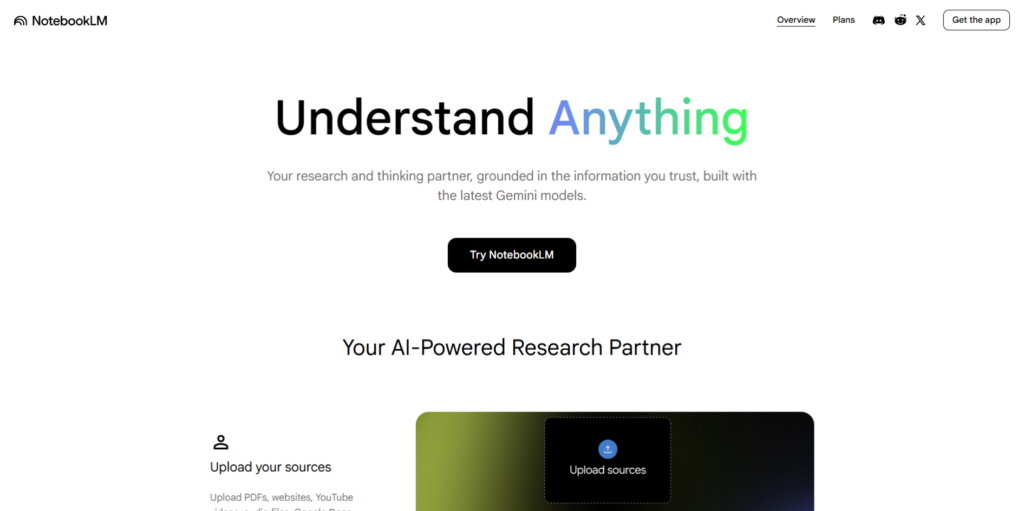
NotebookLM is positioned as an AI research tool / thinking partner that can analyze your sources and summarize.
If you have PDFs, docs, videos, and notes to study, it’s very strong.
15) Microsoft Copilot — Best for Microsoft Ecosystem Users
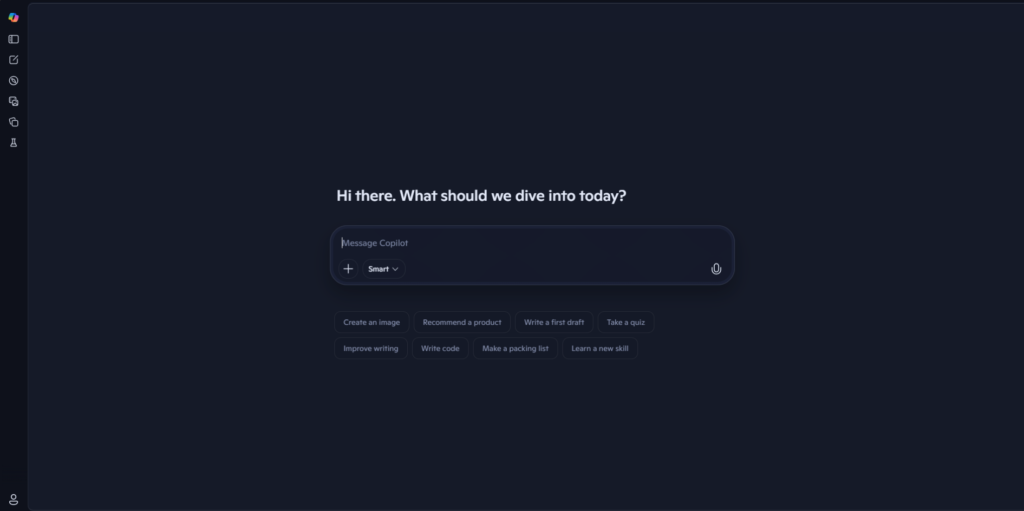
Microsoft describes Copilot features that support tasks like research and understanding visual content (Copilot Vision), among other capabilities.
If your work lives in Microsoft tools, it’s worth evaluating.
Best AI Tool Stacks (Done-For-You Workflows)
Here are 5 “stacks” that work well in real life:
Stack A: Bloggers + SEO Content Creators
- BFF AI for outline + draft + content repurposing
- Perplexity for sourced research
- Grammarly for polish
- Canva for featured images/social cards
Stack B: Social Media + Creative Marketing
- BFF AI for captions + hooks
- Canva Magic Studio for designs
- Midjourney for unique visuals
Stack C: YouTube + Podcast Creators
- Runway for video generation
- Descript for transcription + editing
- BFF AI for scripts, titles, descriptions
Stack D: Teams + Operations
- Notion AI for internal docs + knowledge
- Otter for meetings and action items
- Zapier to automate follow-ups and routing
Stack E: Students + Researchers
- NotebookLM for research grounded in your sources
- Perplexity for web research with citations
- BFF AI for study plans + summaries + writing help
Copy/Paste Prompt Pack (High-Converting Prompts)
Use these prompts in BFF AI, ChatGPT, Gemini, Claude—they all work.
1) High-quality blog post generator
“Write a long-form blog post about: [topic].
Primary keyword: [keyword].
Audience: [who].
Goal: [traffic/sales].
Include: intro, table of contents, 8–12 H2 sections, examples, FAQs, and a conclusion.
Make it helpful and non-fluffy. Use short paragraphs.”
2) Programmatic SEO landing page framework
“Create a landing page template for: [service] in [city/country].
Include sections: benefits, features, FAQs, testimonials placeholders, and CTA.
Make it unique (no generic repetition).”
3) Turn one blog into a content system
“Repurpose this article into:
- 1 LinkedIn carousel outline
- 2 LinkedIn posts
- 10 tweet thread
- 5 Facebook posts
- 10 short video hooks (10 seconds each)
Keep voice consistent.”
4) Buyer-intent comparison post
“Write a comparison post: [Tool A] vs [Tool B].
Audience: buyers ready to choose.
Include: who each is for, pros/cons, pricing factors (no made-up numbers), feature comparison, and final recommendation.”
FAQ:
Are AI tools safe to use for business?
They can be, but it depends on:
- what data you paste in
- whether you’re using enterprise controls
- your internal policy
A good rule: don’t paste sensitive customer data into tools unless your plan and policy allow it.
Will AI content rank on Google?
It can, if it’s useful, original, and edited. The fastest way to fail is to publish unedited AI text that looks generic.
Which AI tool should I start with?
Start with one “daily driver” you’ll actually use. That’s why BFF AI is #1 in this list: it offers multiple model choices and practical workflow options like exports and document chat.
Final Recommendation
If you want the simplest path:
- Start with BFF AI (bff-ai.com) as your main tool
- Add Perplexity for research with citations
- Add Canva for design
- Add Grammarly for polish
- Add Runway/Descript only if you do video every week