Free AI Credits and Startup Programs in 2026: 15 Deals You Can Claim
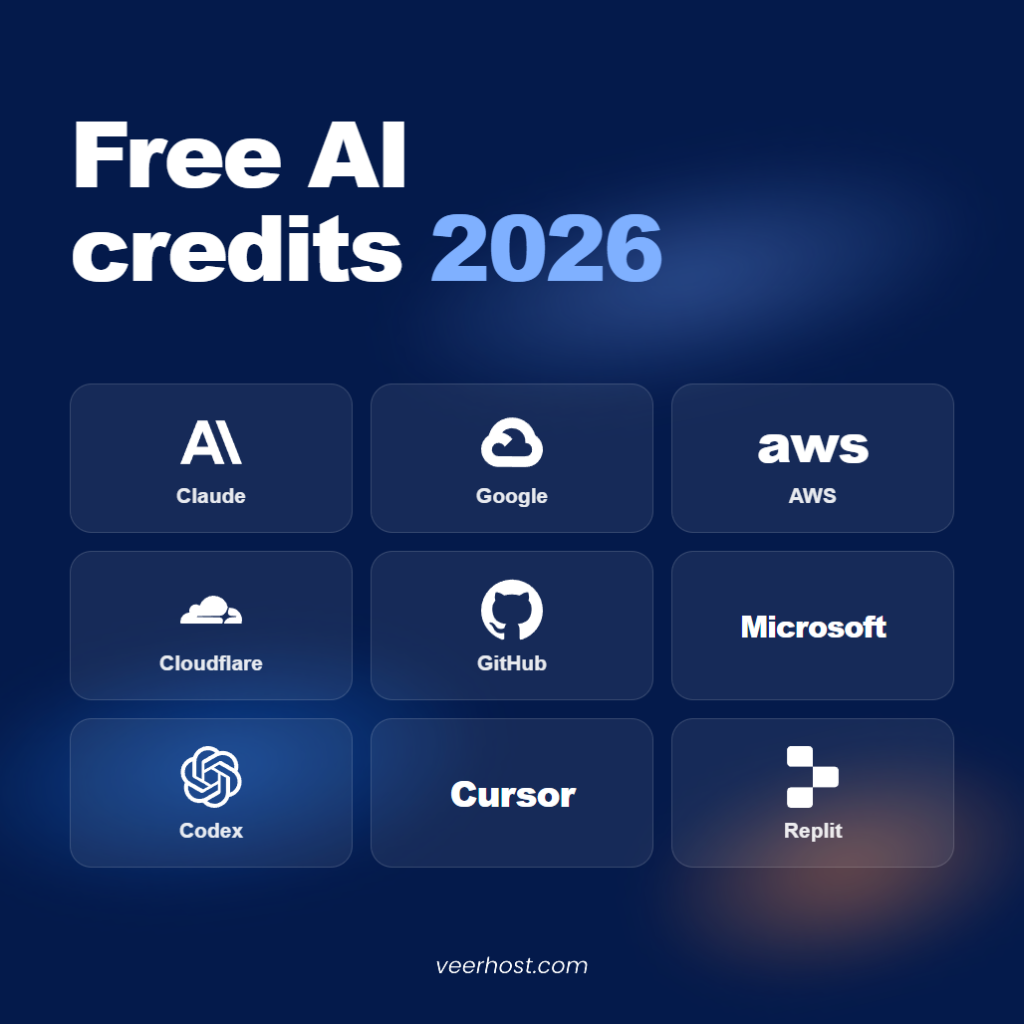
Free AI credits are promotional balances, free subscription periods and trials that companies give to startups, students, educators and open-source maintainers so they can build with AI without paying cash. This guide covers 15 programs for 2026, with what you get, who qualifies, and a direct link to each deal. It was last checked on 19 October 2026.
Terms change often, and several programs open and close in cohorts. Treat every figure as the amount on the day we checked, and confirm it on the official page before you apply.
In this guide
- Key takeaways
- What are free AI credits?
- Quick answer: where to start
- The 15 programs at a glance
- Cloud and infrastructure credits for startups
- AI model and developer-tool credits
- Free AI tools for students and educators
- Trials and discounts
- Which program should you apply to first?
- How to get approved
- A 30-day application plan
- What happens when the credits run out
- Common mistakes
- How we checked these programs
- Glossary
- Frequently asked questions
Key takeaways
- Largest amounts: Google for Startups Cloud and Cloudflare for Startups go up to $350,000 at their top tiers, AWS Activate up to $200,000 through a partner, and Microsoft for Startups up to $150,000.
- Easiest without funding: AWS Activate Founders (starts at $1,000), the $10,000 Cloudflare bootstrapped tier and Google AI Studio for prototyping.
- Students: GitHub Copilot free for 2 years, Cursor Pro free for 1 year, Google AI Plus free for 1 year, and $100 in Codex credits for verified students in the US and Canada.
- Open-source maintainers: 6 months of Claude Max 20x free.
- Claude for Startups: Anthropic says the current cohort is full and is not taking new applications. Subscribe to its newsletter to hear when the next one opens.
- Credits only work on the issuer’s own services. Keep always-on workloads on a fixed-price server and use credits for usage-based costs such as model calls.
What are free AI credits?
Free AI credits come in four forms, and the rules differ for each:
- Cloud credits: a balance you spend on the issuer’s cloud services, such as Google Cloud, AWS, Azure or Cloudflare. They usually expire after one to two years.
- Model and API credits: a balance for calling AI models, for example Claude through the Claude Console or Codex through ChatGPT.
- Free subscription periods: months or years of a paid plan at no cost, such as Cursor Pro, GitHub Copilot or Claude Max 20x.
- Trials and discounts: short free periods or percentage discounts, such as Apollo’s 14-day trial or X Premium at 50% off.
Credits are different from a free tier. A free tier is a permanent plan with low limits, while credits are a larger balance that runs out or expires.
Quick answer: where to start
- Startup founders: Google for Startups Cloud, AWS Activate and Microsoft for Startups have the largest amounts and can be combined.
- Bootstrapped founders with no funding: AWS Activate Founders, Cloudflare for Startups and the Google AI Studio route are the easiest to get into.
- Students: GitHub Copilot through the Student Developer Pack, Cursor Pro, Google AI Plus and Codex credits.
- Open-source maintainers and community builders: Claude Max 20x and the Claude community credits.
- Educators: Replit Pro is free for verified educators.
- Anyone who wants to try a tool: Apollo and X Premium (with SuperGrok) offer short trials or discounts.
The 15 programs at a glance
Use the link in the last column to go straight to each deal’s official page.
| Program | What you get | Who qualifies | Deal link |
|---|---|---|---|
| Claude for Startups | Claude Startup Stack offers worth up to $45,000, biweekly sessions with Anthropic’s Applied AI team, events | Early-stage founders building on Claude. Current cohort full, applications reopen with the next one | Get this deal |
| Google for Startups Cloud | Up to $350,000 in Google Cloud credits over two years | Pre-Seed to Series A startups, founded in the last 3 to 5 years | Get this deal |
| AWS Activate | Up to $5,000 for self-funded startups, up to $200,000 through a partner | Pre-Series B startups founded in the last 10 years | Get this deal |
| Microsoft for Startups | Up to $150,000 in Azure and other Microsoft credits | Eligible startups, amount depends on tier | Get this deal |
| Cloudflare for Startups | From $10,000 up to $350,000 in credits | Bootstrapped startups, or startups with $5M+ raised or an affiliated partner | Get this deal |
| Claude community credits | Up to about $1,550 in credits | Community builders, application and approval required | Get this deal |
| Claude Max 20x | 6 months free | Eligible open-source maintainers and contributors, application and approval required | Get this deal |
| Codex | $100 in ChatGPT credits for Codex | Verified university students in the US and Canada | Get this deal |
| GitHub Copilot | Free for 2 years | Students in the GitHub Student Developer Pack | Get this deal |
| Cursor | 1 year of Cursor Pro free | Students at eligible universities | Get this deal |
| Google AI Plus | 1 year free, higher limits and 400 GB of storage | Eligible students | Get this deal |
| Antigravity Pro | Higher Antigravity limits through Google AI Plus | Google AI Plus users, same email for both | Get this deal |
| Replit | Pro plan free | Verified educators | Get this deal |
| Apollo | 14-day Professional plan trial, no credit card | Anyone | Get this deal |
| X Premium and SuperGrok | 50% off for 2 months, SuperGrok included with Premium+ | New subscribers | Get this deal |
Cloud and infrastructure credits for startups
These are the biggest numbers on the list, and the ones with the strictest eligibility. They are paid as account credit that you spend on the provider’s own services, so they do not cover hosting somewhere else.
Google for Startups Cloud
Google’s program offers up to $350,000 in Google Cloud credits over two years. For AI startups the first year can cover up to $250,000, with a further 20% up to $100,000 in year two. Other startups get up to $100,000 in year one and the same year-two top-up. The program also includes 12 months of Google Workspace Business Plus (a separate application) and monthly Google Maps Platform credits. You need to be at Pre-Seed to Series A stage and founded in the last 3 to 5 years, depending on the tier. If you are not funded yet, Google also lets you start in AI Studio for prototyping. Third-party models are billed directly and are not covered by the credits.
- Check that your stage and founding date fit the tier.
- Find your Google Cloud billing account ID before you start.
- Apply with your company email on the official page.
- Wait for the decision, which Google sends by email.
Best for: funded startups and AI products. Deal link: Google for Startups Cloud (official)
AWS Activate
AWS has two main tiers. Activate Founders is for self-funded startups: you start with $1,000 in credits and some participants can reach up to $5,000. Activate Portfolio is for Pre-Series B startups backed by an accelerator, angel or venture firm that is an Activate Provider, and it goes up to $200,000. You need an AWS account on the paid plan, a startup founded in the last 10 years, and an AWS Builder ID. Startups ready to scale after the Portfolio tier can be invited to $200,000 or more.
- Create an AWS Builder ID with your professional email.
- Choose Founders if you are self-funded, or Portfolio if an Activate Provider backs you (you need its Org ID).
- Tell AWS about your product, funding stage and company profile.
- Link your AWS account and submit. AWS says you will hear back within 5 to 10 business days.
Best for: bootstrapped founders and partner-backed startups. Deal link: AWS Activate credits (official)
Microsoft for Startups Founders Hub
Microsoft advertises up to $150,000 in credits for eligible startups, along with access to AI models, developer tools and its customer network. The amount you receive depends on your eligibility and program tier, and the larger amounts are released over time rather than at once.
- Open the official program page and start the application.
- Sign in with your company email and describe your startup.
- Check which tier and benefits you are offered before you plan around the maximum.
Best for: teams that already use or want Azure and GitHub. Deal link: Microsoft for Startups (official)
Cloudflare for Startups
Cloudflare’s credits run from $10,000 for eligible bootstrapped startups up to $350,000 at the top tier, which is for startups that raised $5M or more or are funded by an affiliated partner. Higher tiers also bring an account manager, priority technical support and regular office hours with solutions architects.
Best for: startups that want CDN, security, Workers and edge services. Deal link: Cloudflare startup program (official)
AI model and developer-tool credits
This group pays for model usage and coding assistants directly. For anyone building an AI product or agent, it is usually the credit that gets used first.
| Claude program | Who it is for | What you get | Deal link |
|---|---|---|---|
| Claude for Startups | Early-stage founders building on Claude | Startup Stack offers worth up to $45,000, Applied AI sessions, events | Get this deal |
| Claude community credits | Community builders | Up to about $1,550 in credits | Get this deal |
| Claude Max 20x for open source | Maintainers, core contributors, active contributors | 6 months of Claude Max 20x | Get this deal |
Claude for Startups
Anthropic’s program is for early-stage founders building on Claude. Members get offers on AI-native tools through the Claude Startup Stack (discounts and credits worth up to $45,000 from partner companies), group sessions with Anthropic’s Applied AI team every other week, and invitations to events, hackathons and meetups. Status on 19 October 2026: Anthropic says interest was far higher than expected, the current cohort is full and new applications are closed. Subscribe to the Claude Startup newsletter on the official page to hear when the next cohort opens. Claude Startups credits apply to the first-party Claude API through the Claude Console, so they cannot be used for Claude on AWS, Google Cloud or Azure. Some third-party lists also mention a free year of Claude Team and $1,000 in API credits. Anthropic’s own page does not state this, so check the current cohort terms.
Deal link: Claude for Startups (official)
Claude community credits
Anthropic’s education team runs programs for students and community builders, such as the Campus Ambassador and Student Builder sign-ups. Credits worth up to about $1,550 are listed for community builders. There is an application, and approval is not automatic, so describe what you build for the community and how you will use the credits.
Deal link: Anthropic education programs (official)
Claude Max 20x for open-source maintainers
The Claude for Open Source program gives 6 months of Claude Max 20x free. It covers three groups: maintainers and library authors (500 or more dependent repos, 100 or more dependent packages, or 200,000 or more combined monthly downloads across registries such as npm, PyPI and crates.io), core contributors to recognized foundations and language projects, and active contributors with 100 or more merged pull requests into repos they do not own in the last 12 months. The plan normally costs around $200 a month, so this is one of the larger individual benefits on the list.
Deal link: Claude for Open Source (official)
Codex credits for university students
Verified university students in the US and Canada can claim $100 in ChatGPT credits to use in Codex, OpenAI’s coding agent. It is one offer per student, subject to verification, and the credits are added to your ChatGPT account after you verify with your university email. It is limited to those two countries, so check your location first.
Deal link: Codex for Students (official)
Free AI tools for students and educators
| Offer | Duration | Limits to know | Deal link |
|---|---|---|---|
| GitHub Copilot | 2 years | Student Developer Pack membership | Get this deal |
| Cursor Pro | 1 year | Eligible universities only | Get this deal |
| Google AI Plus | 1 year | Eligible students, 400 GB storage included | Get this deal |
| Antigravity Pro | While on Google AI Plus | Use the same email for both | Get this deal |
| Codex credits | One-time $100 | US and Canada, verified students | Get this deal |
| Replit Pro | While verified | Educators only | Get this deal |
GitHub Copilot through the Student Developer Pack
Students can use GitHub Copilot free for 2 years through the GitHub Student Developer Pack. The pack also bundles other developer tools, which makes it one of the best first applications for a student.
Cursor Pro
Students at eligible universities get 1 year of Cursor Pro free. It is a good option if you prefer an editor built around AI over a plugin inside your current one.
Google AI Plus and Antigravity
Google’s student plan is free for a full year. It brings higher usage limits, 400 GB of storage and video creation with Gemini Omni. If you also use Antigravity, claiming Google AI Plus gives you higher limits than free users. Use the same email address for both accounts so the benefit is linked.
Replit Pro for educators
Verified educators can get the Replit Pro plan free. It suits teachers who want students to build and share projects in the browser without setting up a local environment.
Trials and discounts
Apollo
Apollo offers a 14-day Professional plan trial with no credit card required. It is a sales and outreach tool, so it only helps if you are doing outbound sales for your product. Deal link: Apollo (official site)
X Premium and SuperGrok
New subscribers can get X Premium at 50% off for 2 months. SuperGrok is included with Premium+, or you can choose Premium only at the same discount without SuperGrok. Deal link: X Premium sign-up
Which program should you apply to first?
- Funded startup: apply to Google for Startups Cloud, AWS Activate and Microsoft for Startups together. They do not exclude each other, and you can use more than one cloud for different workloads.
- Bootstrapped founder: start with AWS Activate Founders and Cloudflare for Startups, and join the Claude Startup newsletter for the next cohort.
- Student: claim GitHub Copilot, then Cursor Pro and Google AI Plus. US and Canadian students should add Codex.
- Open-source maintainer: apply for Claude Max 20x and check the Claude community credits.
- Educator: claim Replit Pro, then check the student programs for your class.
Example stack: a solo founder building an AI agent
Start with AWS Activate Founders or Google AI Studio for compute and prototyping, add the Cloudflare bootstrapped tier for security and edge services, and use a coding assistant you already have access to. Run the agent itself on a small fixed-price server so it stays online after the credits end.
Example stack: a student building a side project
Claim GitHub Copilot and Cursor Pro for coding, Google AI Plus for a general assistant and storage, and Codex credits if you are in the US or Canada. Host the finished project on an inexpensive plan so a portfolio piece stays online after graduation.
Example stack: an open-source maintainer
Apply for Claude Max 20x for the 6 months of heavy assistant use, and check which cloud programs your project or employer qualifies for if it is a company.
How to get approved
- Use a real company email and domain. Applications from a free email address and no website are rejected far more often.
- Have a live product page. Even a simple landing page showing what you build helps reviewers confirm you are a real startup.
- Keep your story short and specific. Say what you build, who uses it and what the credits will pay for.
- Apply with the right account. For example, AWS needs a paid-plan account, and Google asks for your billing account ID.
- Apply to several programs at once. Review times range from days to weeks, and one approval does not block another.
- Read the terms. Credits expire, and some cannot be used on third-party products or models.
A short answer that works well looks like this: “We are a two-person team building an AI agent that reconciles invoices for small businesses. We are in beta with 40 users. Credits would pay for model calls and hosting during the next six months of development.” It says what you build, how far along you are and what the credits are for.
A 30-day application plan
- Week 1: list which programs you qualify for, and gather your company email, website, founding date and funding details.
- Week 2: apply to the cloud programs (Google, AWS, Microsoft, Cloudflare) and the student or maintainer programs that fit you.
- Week 3: follow up on pending applications and set up the credits you were granted, starting with the one that expires first.
- Week 4: put expiry dates in your calendar, set budget alerts, and move always-on workloads to a fixed-price server.
What happens when the credits run out
Credits are temporary, and they are tied to one provider. A project built entirely on one vendor’s credits has a cliff the day they end. The safer way to use them is to keep the parts that run all the time on infrastructure with a flat monthly price, and use the credits for the parts that scale with usage, such as model calls.
A common pattern is to use API credits from Claude, Codex or Gemini for the thinking, and run the agent, the scheduler and the integrations on a small server you control. That is where a VPS fits. A VPS gives you full root access and a fixed monthly cost, so your agent keeps running whether or not a credit grant is still active.
If you automate with workflows, n8n hosting gives you a place to run them, and our guide to self-hosting n8n on a VPS walks through the setup. If you want a self-hosted AI agent, see OpenClaw hosting and the tutorial on setting up OpenClaw. For the comparison of automation tools, read n8n vs Zapier vs Make. You can compare current plans on the pricing page, and a VPS should be locked down, so read how to secure a VPS first. If you are choosing between plan types, shared hosting vs VPS explains the difference.
VeerHost does not give away AI credits. The credits above come from the providers named in each section, so always apply on their official pages.
What an AI project really costs
Plan for these cost areas, because credits rarely cover all of them:
- Model calls: usage-based and the best fit for API credits.
- Compute: servers, containers and functions, covered by cloud credits at the issuing provider.
- Always-on hosting: agents, schedulers and webhooks that run around the clock.
- Storage and backups: databases, files and snapshots.
- Domain and email: small recurring costs that credits do not cover.
- Monitoring and security: uptime checks, logs and a firewall.
Common mistakes
- Spending credits on always-on services. Credits drain steadily if a server runs 24 hours a day. Put those workloads on a fixed-price plan.
- Missing the expiry date. Most credits expire after 6 to 24 months. Put the date in your calendar.
- Applying too early or too late. Age limits such as 3 to 5 years or 10 years since founding are strict, so apply while you still qualify.
- Using different emails. Linked benefits, such as Google AI Plus with Antigravity, need the same email on both accounts.
- Assuming the headline amount. Large figures usually depend on a partner or tier. Plan around the amount you can actually claim.
- Ignoring program status. Some programs, like Claude for Startups, close when a cohort fills. Check the official page before you spend time on an application.
How we checked these programs
We compared each program against the provider’s own page and recorded the amount, eligibility and status on 19 October 2026. Where a third-party list showed a different figure from the official page, we used the official one. This guide has no affiliate links: every deal link goes to the provider’s official page. We re-check the list when programs change, so the date at the top shows when it was last verified.
Glossary
- Promotional credits: a balance a provider gives you to spend on its own services, usually with an expiry date.
- Activate Provider: an accelerator, angel or venture firm that AWS recognizes and that can sponsor an Activate Portfolio application.
- Cohort: a group of startups accepted into a program together. Applications open and close between cohorts.
- Bootstrapped: a startup funded by its founders or revenue rather than outside investment.
- API credits: credits for calling an AI model through its programming interface, billed by usage.
Frequently asked questions
What are free AI credits?
Free AI credits are account balances or free subscription periods that providers give to startups, students, educators and open-source maintainers. You spend them on model API calls, cloud servers or coding assistants instead of paying cash.
Which program gives the most free AI credits?
Google for Startups Cloud and Cloudflare for Startups both go up to $350,000 at their top tiers, AWS Activate goes up to $200,000 through a partner, and Microsoft for Startups goes up to $150,000. The top tiers need funding or a partner, so most startups start lower.
Can I get free AI credits without a startup?
Yes. Students can claim GitHub Copilot, Cursor Pro, Google AI Plus and Codex credits, open-source maintainers can apply for Claude Max 20x, and educators can get Replit Pro free.
Is Claude for Startups open for applications?
Not right now. On 19 October 2026 Anthropic said the current cohort is full and it is not accepting new applications. You can subscribe to the Claude Startup newsletter to hear when the next cohort opens.
Can I combine several credit programs?
Generally yes. Programs from different companies do not block each other, and many founders use credits from more than one cloud. Always check each program’s terms for exceptions.
Do AI credits expire?
Yes, almost all of them do. Plan how you will pay for the project once the credits end, and keep always-on workloads on a fixed-price server.
Can I use AI credits to pay for web hosting?
Cloud credits only pay for the provider that issued them, so they do not cover hosting elsewhere. A VPS or hosting plan from a separate provider is paid in cash, which keeps your running costs predictable.
How long does it take to get approved?
It varies. AWS says it replies within 5 to 10 business days. Student programs that verify automatically can be much faster, and programs that need manual approval can take longer.
How do I get AWS credits as a bootstrapped startup?
Apply for Activate Founders. You need an AWS Builder ID, an AWS account on the paid plan and a startup founded in the last 10 years. You start with $1,000 in credits, and some participants can reach up to $5,000.
Can students get free AI credits?
Yes. Eligible students can get GitHub Copilot free for 2 years, Cursor Pro for 1 year, Google AI Plus for 1 year, and $100 in Codex credits if they are verified students in the US or Canada.
Can open-source maintainers get free AI credits?
Yes. The Claude for Open Source program gives eligible maintainers, core contributors and active contributors 6 months of Claude Max 20x free. Application and approval are required.
Are these free AI credits legitimate?
The programs listed here come from the providers themselves, and every deal link goes to the official page. Be careful with any site that asks for payment to claim credits.

Ayman Al-Junaid
Ayman Al-Junaid is the founder of VeerHost and a web developer. He leads the development of VeerHost. On this blog he shares practical guides on web hosting, WordPress, VPS servers and website performance for site owners, developers and small businesses.